
To mark Labour Day we want to talk about something we see every day in clinic: work-related injuries. Musculoskeletal disorders such as back, neck or wrist pain are the most common occupational health problem in Europe and one of the main causes of sick leave.
The good news is that many of them can be prevented with small changes to the workstation and daily habits, and when they do appear they respond well to early treatment.
The most common work-related injuries
- Lower back pain: from lifting loads, sustained postures or sitting for many hours.
- Neck and shoulder pain: very common in office work and tasks with the arms raised.
- Shoulder tendinopathies: in jobs that require lifting the arms overhead.
- Tennis elbow and carpal tunnel: from repeated hand and wrist movements.
- Knee pain: in jobs with long hours standing, kneeling or climbing stairs.
Risks by type of job
Office work
Sustained postures, a badly placed screen and lack of movement are the main enemies. We cover this in detail in our ergonomics guide and our article on tech neck.
Physical work and manual handling
Construction, logistics, farming, cleaning or warehouse work combine effort, repetition and awkward postures. Lifting technique and task organisation are key.
Healthcare and care work
Moving patients or dependent people places a heavy load on the back. Using lifting aids and working as a team greatly reduces the risk.
Retail, hospitality and hairdressing
Long hours standing, repeated movements and raised-arm postures encourage leg, back and shoulder pain.
Keys to preventing injuries at work
- Move often: active breaks of two or three minutes every hour.
- Lift with good technique: keep the load close, bend your knees and avoid twisting while carrying weight.
- Adapt the workstation: desk, screen and tool heights.
- Rotate tasks to avoid always repeating the same movements.
- Stay physically fit: strength is the best protection against overload.
- Do not normalise pain: seeking help early stops a niggle becoming sick leave.
The role of physiotherapy in occupational health
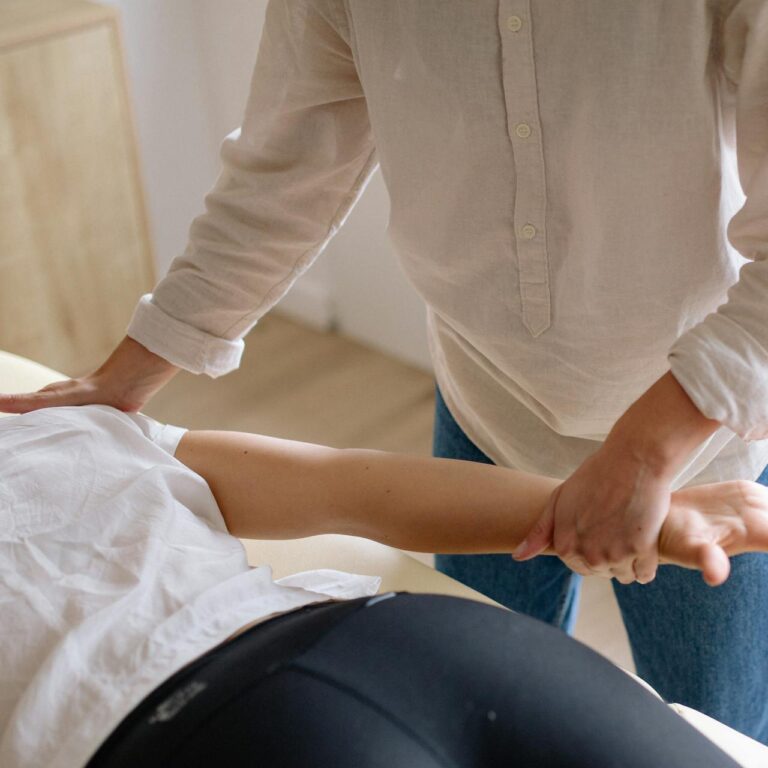
Physiotherapy helps both treat and prevent injuries: workstation assessments, exercise programmes tailored to each type of job, postural training and early treatment of the first symptoms. For companies, investing in prevention reduces absenteeism and improves team wellbeing.
Physiotherapy and occupational health in Gines
If your job is taking its toll, or you are a company in the Aljarafe that wants to look after its team, we help with assessments, treatment and prevention programmes. At Therapeía Fisioterapia we see patients at Avenida de Europa 3G in Gines (Seville), just minutes from Bormujos, Espartinas, Castilleja de la Cuesta, Valencina and the rest of the Aljarafe area. After a full assessment we design a physiotherapy and prevention plan tailored to you. You can meet our physiotherapy team or book an appointment by calling +34 624 244 420.
For more information from a reliable source, see the European Agency for Safety and Health at Work on occupational safety and health.
Frequently asked questions about work-related injuries
What is the most common work-related injury?
Lower back pain is the most common work-related musculoskeletal disorder, followed by neck and shoulder pain.
How often should I take breaks at work?
Ideally take a two to three minute active break every 45 to 60 minutes, especially in sedentary or repetitive jobs.
Can physiotherapy help avoid sick leave?
Yes. Treating the first symptoms early and adapting the workstation often stops the problem worsening and forcing you to stop working.