
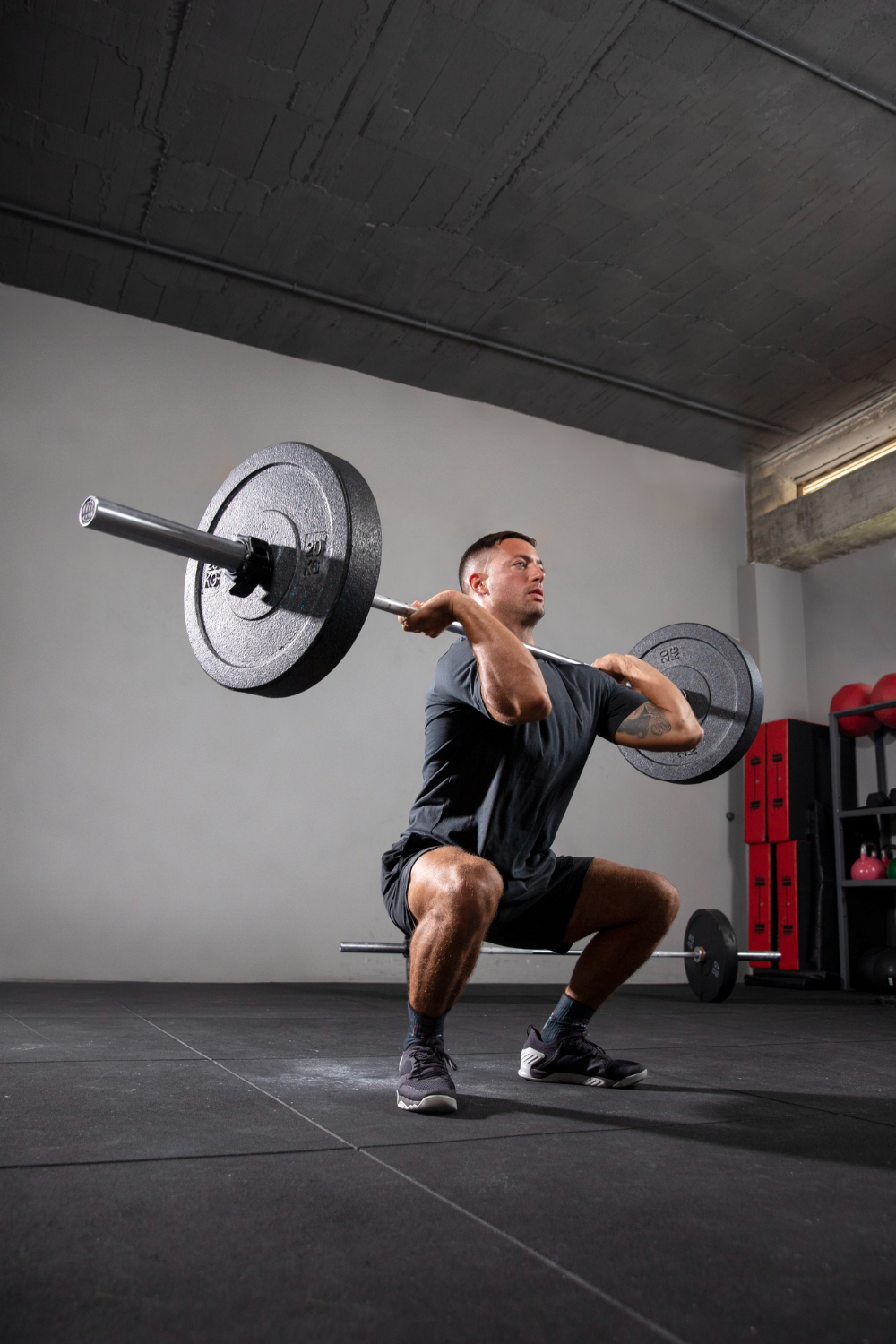
Does your shoulder hurt when you do snatches or pull-ups? Discover what subacromial impingement is in CrossFit, how to prevent it, and how functional physiotherapy can help you perform at your best.
CrossFit has revolutionized the fitness world thanks to its high intensity and combination of gymnastic, metabolic, and weightlifting movements. However, this versatility demands outstanding biomechanical adaptation. Of all the joints, the shoulder suffers the most due to the large number of overhead movements performed in the WOD (Workout of the Day).
One of the most common diagnoses among athletes is subacromial impingement syndrome. At Therapeía Physiotherapy, we know that for a CrossFitter, the word “rest” is practically taboo. That’s why our approach isn’t about stopping your training, but about understanding why your shoulder has become inefficient and how to restore its functionality.

What is Subacromial Impingement? 🦴🩹
The shoulder is a ball-and-socket joint with incredible mobility, but at the cost of limited stability. Impingement occurs when the space between the acromion (part of the scapula) and the head of the humerus narrows. Vital structures such as the supraspinatus tendon and the subacromial bursa pass through this small space.
When we perform repetitive movements with poor technique or accumulated fatigue, these structures become “pinched” or compressed, generating inflammation, acute pain when lifting the arm and, in the long term, small fibrillar tears.
The silent culprit: Scapular Dyskinesia 🕵️♀️
In CrossFit, shoulder pain is rarely the fault of the shoulder itself. Most of the time, the problem lies in the scapula. For the arm to rise safely, the scapula must rotate, tilt, and glide in perfect sync. This is known as scapulohumeral rhythm.
If the muscles that stabilize the scapula (such as the serratus anterior and lower trapezius) are weak or inhibited, the scapula doesn’t move in time, the subacromial space closes, and impact is inevitable. Movements like kipping pull-ups or muscle-ups multiply these forces due to inertia, turning a minor lack of mobility into a debilitating injury.
Why does it appear in the WOD? Risk factors 🚩
- Lack of thoracic mobility: If your thoracic spine is “locked up” (common after hours at the office), your shoulder will have to compensate for that range of motion you lack to lift the bar overhead in an overhead squat.
- Fatigue and loss of technique: In the final minutes of an AMRAP, motor control decreases. This is when the shoulders tend to rise towards the ears, compromising joint space.
- Imbalance between pushing and pulling: Many CrossFit programs emphasize pushing (Push Press, Wall Balls) but neglect the horizontal pulling necessary to balance the posterior musculature.
Strategies for training without pain ✅
The good news is that impingement can be managed without leaving the box. Here are the key points:
- Active mobility before starting: Hanging from the bar isn’t enough. Perform shoulder external rotation exercises with resistance bands and thoracic spine mobilizations with a foam roller.
- Smart scaling: If you experience pain while doing the snatch, switch to power cleans or exercises that don’t involve the painful range of motion while you regain functionality. Don’t push through acute pain.
- Rotator cuff strengthening: Dedicate 10 minutes at the end of your session to working on shoulder stability. These muscles are what keep the head of the humerus “in place.”
The Therapeía approach: Physiotherapy for elite and amateur athletes 👨⚕️✨
At Therapeía Physiotherapy, we speak your language. Our treatment for Crossfitter shoulder includes:
- Musculoskeletal Ultrasound: To assess the actual condition of the tendons and see if there is inflammation or a tear that we need to manage.
- Manual Therapy and Neuromodulation: To reduce pain immediately and “reset” the nervous system that is sending protective signals (pain).
- Analysis of the sporting movement: If necessary, we analyze how you perform the movement to correct technical errors that are overloading your joint.
- Functional rehabilitation: We will prescribe specific exercises that you can integrate into your usual warm-up so that your shoulder is more resilient than ever.
Is your shoulder preventing you from beating your next PR? 🆘
Don’t wait until the pain becomes chronic and forces you to stop completely. At Therapeía, we help you identify the cause of your discomfort and design a plan to get you back on track stronger than ever. Your performance is our priority.
👉 Book your appointment today at Therapeía Physiotherapy and forget about shoulder pain in your next WOD