
After pregnancy many women notice their tummy is not quite the same: a bulge along the midline when sitting up, a “loose” feeling in the abdomen or lower back discomfort. One of the most common causes is diastasis recti, or abdominal separation.
What diastasis recti is
During pregnancy the rectus abdominis muscles separate to make room for the baby, and the tissue joining them in the middle, the linea alba, stretches and thins. This is normal: by the end of pregnancy almost all women have some degree of separation.
In many cases it recovers on its own in the weeks after birth, but in others the separation or lack of tension in the linea alba persists and can cause symptoms.
How to tell if you have diastasis
A rough way to check:
- Lie on your back with knees bent and feet flat.
- Place your fingers horizontally on the midline of your abdomen at belly button level.
- Gently lift your head and shoulders off the floor.
- Feel whether there is a gap between the muscles, how many fingers fit, and whether the area sinks or bulges.
What matters most is not just how far apart the muscles are, but whether the linea alba can generate tension. That is why it is best assessed by a physiotherapist.
Symptoms it can cause
- A bulge or “dome” along the midline when straining.
- A feeling of abdominal weakness.
- Lower back or pelvic pain.
- It is sometimes linked to pelvic floor problems such as leaking. Read more in our article on the pelvic floor and sport.
How physiotherapy helps
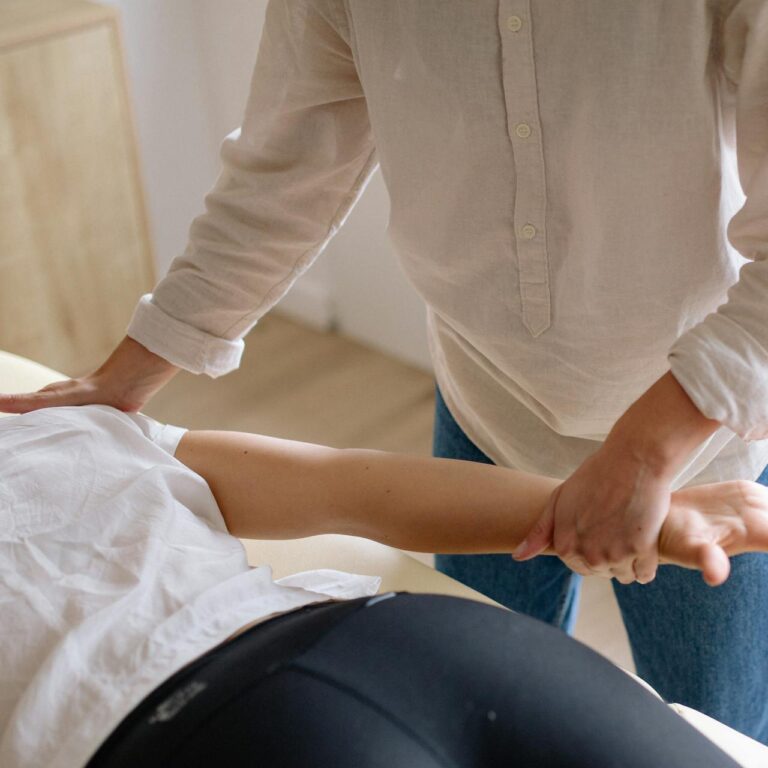
- Assessment of the abdomen and pelvic floor.
- Coordinating breathing with the deep abdominal and pelvic floor muscles.
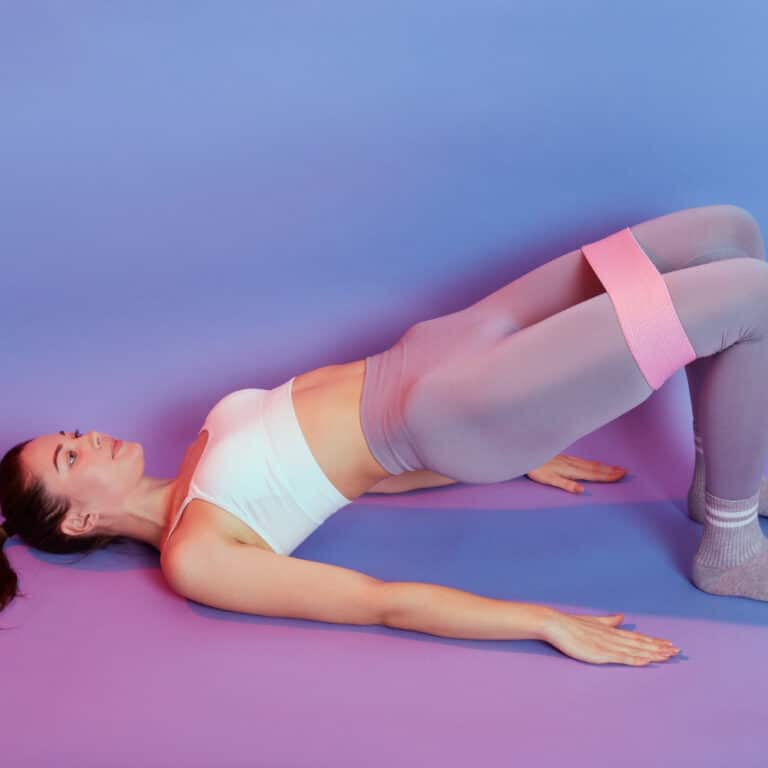
- Progressive exercise: transversus abdominis activation, whole-body strength work and, gradually, more demanding exercises.
- Everyday advice: how to get out of bed, lift your baby or load the pushchair without increasing abdominal pressure.
- Planning a safe return to sport.
Therapeutic Pilates adapted for the postpartum period is a great tool at this stage.
Exercises to avoid at first
- Classic crunches or repeated sit-ups.
- Exercises that cause the midline to bulge.
- Heavy lifting without breath control.
Later on, with good control, these exercises can be gradually reintroduced.
When to start
A pelvic floor and abdominal assessment is recommended from six weeks after birth, or earlier if there is discomfort. It is never too late: even long-standing diastasis can improve.
Postpartum physiotherapy in Gines
If you have recently had a baby or have felt your abdomen is weak since pregnancy, we assess your abdomen and pelvic floor and support your recovery. At Therapeía Fisioterapia we see patients at Avenida de Europa 3G in Gines (Seville), just minutes from Bormujos, Espartinas, Castilleja de la Cuesta, Valencina and the rest of the Aljarafe area. After a full assessment we design a pelvic floor and postpartum physiotherapy plan tailored to you. You can meet our physiotherapy team or book an appointment by calling +34 624 244 420.
For more information from a reliable source, see World Physiotherapy on physiotherapy.
Frequently asked questions about diastasis recti
Does diastasis recti close on its own?
In many cases it improves on its own in the first weeks after birth. If it persists or causes symptoms, physiotherapy helps.
Can I do sit-ups if I have diastasis?
At first avoid classic sit-ups and work on breathing and the deep abdominal muscles. Later they can be reintroduced in a controlled way.
Does diastasis recti need surgery?
In most cases, no. Surgery is reserved for very wide separations with symptoms that do not improve after proper conservative treatment.