September brings the return to school and, with it, a question many families ask us in clinic: is carrying a backpack harmful for my child? Back pain in children and teenagers is more common than it seems, and although the backpack is not the only cause, it is a factor we can easily control.
How heavy should a school backpack be?
The general recommendation is that a backpack should not exceed 10% of the child’s body weight. So a 30 kg child should not regularly carry more than 3 kg. In practice, many backpacks far exceed this.
Some ideas to reduce the weight:
- Check the backpack each evening with your child and pack only what is needed for the next day.
- Use school lockers if available.
- Choose lightweight notebooks and pencil cases.
- Talk to the school about digital books or leaving material in class.
How to choose and wear the backpack
- Two wide, padded straps, always worn on both shoulders.
- Snug against the back, not hanging below the waist. The bottom should sit at lower back level.
- Padded back panel and, if possible, a waist or chest strap.
- Heaviest items closest to the back.
- Size appropriate to age: no wider than the child’s torso.
Wheeled bags: yes or no?
A trolley can be a good option when the load is heavy and the route is flat. However, it has drawbacks: carrying it up stairs, always pulling with the same arm and twisting the trunk. If used, alternate arms and push rather than pull when possible.
Beyond the backpack: posture and movement
The factor that best protects children’s backs is movement. Children who are regularly active have less back pain. Some recommendations:
- At least 60 minutes of physical activity a day, in line with recommendations for children.
- Limit continuous screen time and encourage breaks.
- Adapt the study area at home: chair and desk suited to their height, feet supported and screen at eye level.
- Encourage a variety of sports.
Signs to seek advice
- Back pain lasting more than a few weeks or waking them at night.
- Pain with fever, weight loss or tiredness.
- Asymmetry in the shoulders, waist or back when bending forward. These may be signs of scoliosis, which should be monitored during growth.
- Tingling or weakness in the legs.
Children’s and postural physiotherapy in Gines
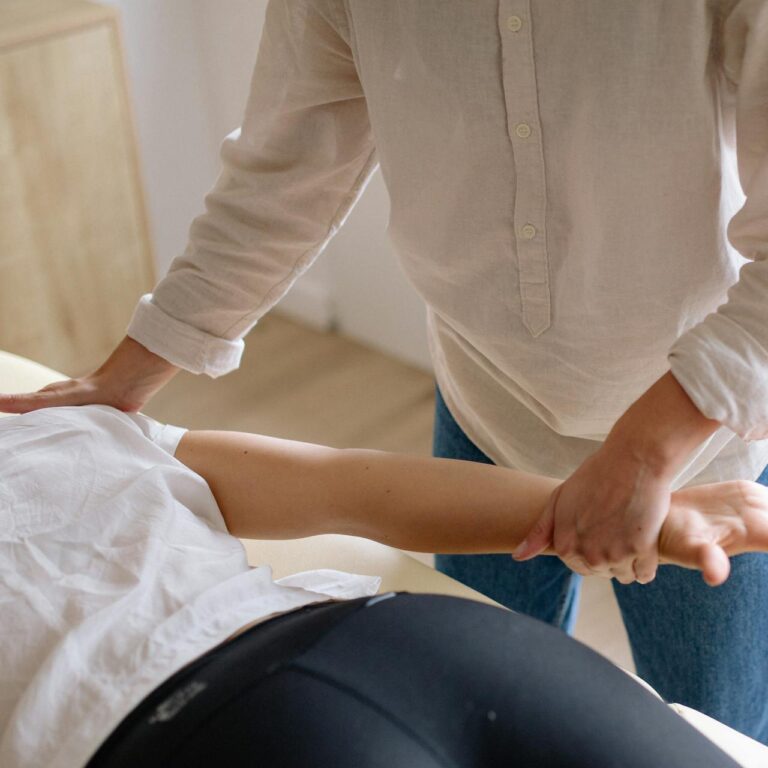
If your child has back pain or you are worried about their posture, we carry out an assessment and give you simple exercise and lifestyle advice. At Therapeía Fisioterapia we see patients at Avenida de Europa 3G in Gines (Seville), just minutes from Bormujos, Espartinas, Castilleja de la Cuesta, Valencina and the rest of the Aljarafe area. After a full assessment we design a physiotherapy and postural reeducation plan tailored to you. You can meet our physiotherapy team or book an appointment by calling +34 624 244 420.
For more information from a reliable source, see World Physiotherapy on physiotherapy.
Frequently asked questions about school backpacks
How much weight can a child carry in a backpack?
As a guide, no more than 10% of their body weight on a regular basis.
Are wheeled backpacks better?
They can help when the load is very heavy and the route is flat, but they are awkward on stairs. A light backpack worn snugly on both shoulders is usually best.
Does carrying a backpack on one shoulder cause scoliosis?
There is no evidence it causes scoliosis, but it can cause discomfort through overload. It is better to always use both straps.