
Waking up with a tired jaw, clicking when you open your mouth, pain when chewing or headaches at the temples: these are common symptoms of temporomandibular joint (TMJ) disorders, often linked to bruxism. What many people do not know is that physiotherapy is one of the recommended treatments.
What the TMJ is
The temporomandibular joint connects the jaw to the skull, just in front of the ear. It is one of the joints we use most: when talking, chewing, swallowing or yawning. It is closely linked to the muscles of the face, neck and head posture.
Symptoms of a temporomandibular disorder
- Pain in the jaw, in front of the ear or at the temple.
- Clicking or noises when opening and closing the mouth.
- Difficulty opening the mouth fully or a feeling of locking.
- Pain when chewing hard foods.
- Associated headache, earache or neck pain.
The role of bruxism
Bruxism is the habit of clenching or grinding the teeth, during sleep or while awake. It is linked to stress, anxiety, poor sleep and some habits. Keeping the jaw muscles tense for hours overloads them and can cause pain.
The connection with the neck
Head posture and neck tension affect the jaw, and vice versa. People with TMJ pain often also have neck pain or spend long hours in postures like those of tech neck.
How physiotherapy helps
- Assessment of the jaw, neck and posture.
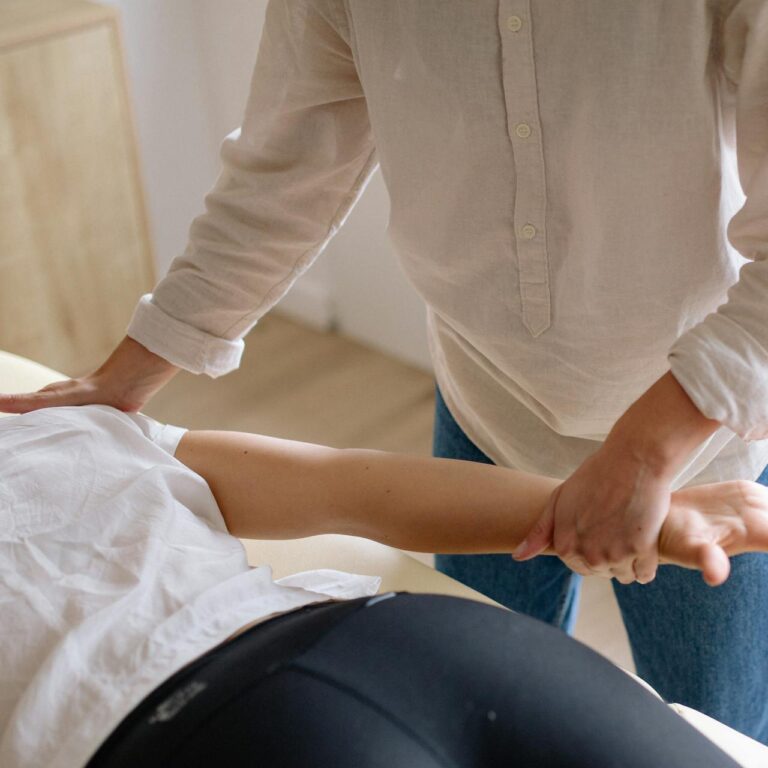
- Manual therapy for the chewing and neck muscles, inside and outside the mouth.
- Control and coordination exercises for mouth opening.
- Education: recognising and reducing daytime clenching.
- Relaxation and breathing to reduce tension.
- Coordination with your dentist, who will assess whether an occlusal splint is needed.
Everyday tips
- Rest position: lips together, teeth apart and tongue resting on the roof of the mouth.
- Check several times a day whether you are clenching.
- Avoid chewing gum and very hard foods while there is pain.
- Do not rest your jaw on your hand for long periods.
- Look after your sleep and find time to manage stress.
When to seek advice
If the pain lasts more than a few weeks, your jaw locks or you struggle to open your mouth, a joint assessment with your dentist and a physiotherapist is worthwhile.
TMJ physiotherapy in Gines
If your jaw hurts, you clench your teeth or you have headaches that may come from the TMJ, we assess your case and work in coordination with your dentist. At Therapeía Fisioterapia we see patients at Avenida de Europa 3G in Gines (Seville), just minutes from Bormujos, Espartinas, Castilleja de la Cuesta, Valencina and the rest of the Aljarafe area. After a full assessment we design a temporomandibular physiotherapy plan tailored to you. You can meet our physiotherapy team or book an appointment by calling +34 624 244 420.
For more information from a reliable source, see World Physiotherapy on physiotherapy.
Frequently asked questions about bruxism and the TMJ
Can a physiotherapist treat the jaw?
Yes. Temporomandibular physiotherapy treats jaw pain and dysfunction with manual therapy, exercise and education, in coordination with the dentist.
Does a splint cure bruxism?
A splint protects the teeth and can reduce overload, but it does not remove the habit. Combining it with physiotherapy and stress management gives better results.
Why does my jaw click?
Clicking is usually due to a change in the position of the joint disc. If it is painless and does not limit opening, it does not always need treatment.