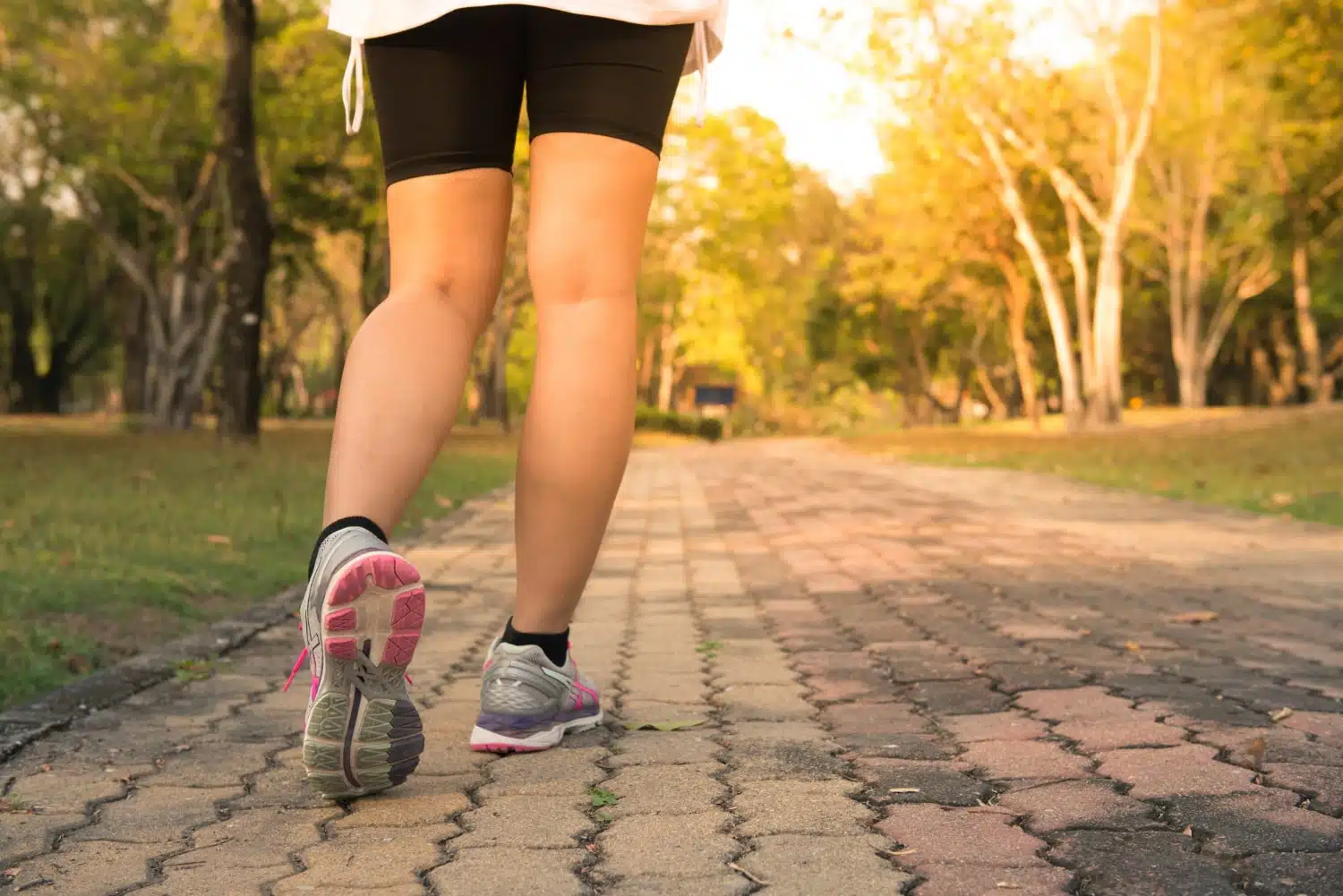
Did you know that lower back pain can originate in your feet? Discover the relationship between your gait and your spine, and how a biomechanical study can help you.
Often, when we experience persistent pain in the lower back or neck, our first reaction is to massage the affected area or apply heat. However, at Therapeía Physiotherapy, we understand that the human body doesn’t function as a collection of isolated parts, but rather as an integrated kinetic chain. In this structure, the feet are the foundation; if the base of a building is uneven, cracks will eventually appear in the roof.
Today we analyze how your gait and foot placement may be affecting the health of your spine and why a biomechanical analysis is key to a pain-free life.

The ascending kinetic chain: From the ground to the cervical spine
In physiotherapy, we talk about ascending kinetic chains to explain how a movement in the foot generates a cascading reaction upwards. When we walk, each impact with the ground generates a force that must be absorbed and distributed.
If the footprint is defective, that energy is not dissipated properly and travels through:
- The ankle and knee: That they must rotate to compensate for the support.
- The hip: That tilts or rotates, altering the position of the pelvis.
- The spine: Which is forced to make compensatory curves to maintain forward gaze and balance.
Types of footsteps and their consequences on the back
No two feet are alike, but broadly speaking, gait abnormalities are usually divided into three categories with very clear effects on posture:
1. Flat Feet or Excessive Pronation
When the arch of the foot collapses and the foot rolls inward, internal rotation of the tibia and femur occurs. This often leads to anterior pelvic tilt (the pelvis tilts forward), which increases the lumbar curve (hyperlordosis). The result is usually chronic lower back pain and strain on the lower back muscles.
2. Cavus Feet or Supination
An excessively high arch reduces the support surface, which decreases shock absorption. Supinated feet are “rigid,” meaning that the vibrations of each step are transmitted directly to the knees and spine, accelerating disc degeneration and causing vertebral microtrauma.
3. Dysmetria (One leg longer than the other)
Although not strictly a type of gait, a difference in leg length (even by just a few millimeters) alters the gait and causes a scoliotic posture. The spine curves laterally to compensate for the difference in height, generating asymmetrical muscle contractions in the back.
How do you know if your footfall is the problem?
There are warning signs that indicate that the origin of your back pain could be in your feet:
- Uneven wear on the sole of your shoes (more inside or out).
- Pain in the knees or hips that occurs after walking short distances.
- Lumbar contractures that recur soon after physical therapy treatment.
- Feeling unstable or frequent ankle sprains.
Therapeia’s Approach: Biomechanical Analysis and Globality
At our clinic, we don’t just treat the local symptom. To resolve a spinal problem related to gait, we follow a rigorous protocol:
- Static and Dynamic Assessment: We analyze how you stand and how you move. We observe the alignment of your ankles, knees, and the position of your iliac spines.
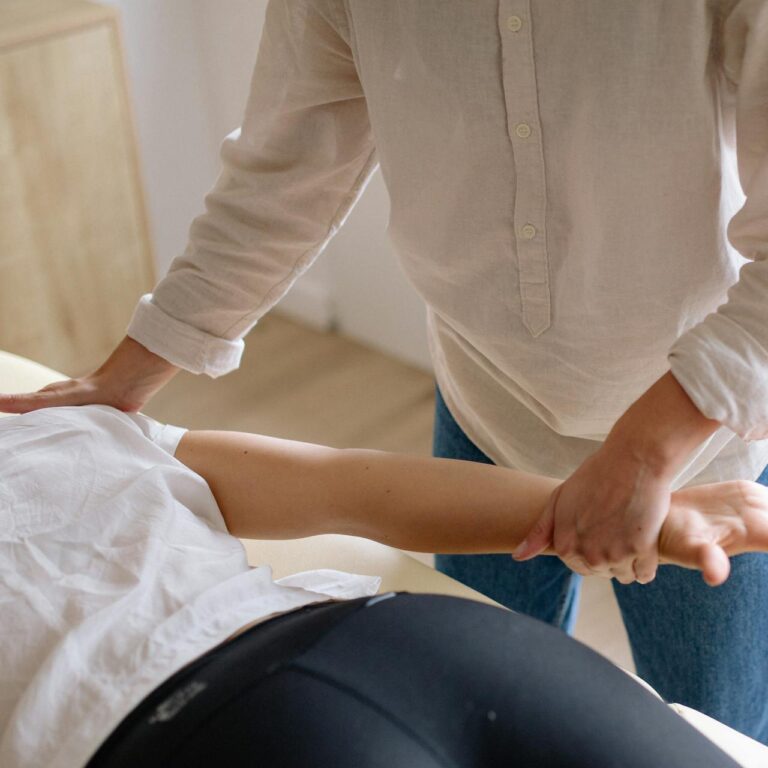
- Osteopathic Manual Therapy: Before recommending any correction, it is vital to “unblock” the joints that have been compensating for years. We treat the mobility of the talus, hip, and lumbar vertebrae.
- Gait Retraining: Through therapeutic exercise, we teach the patient to activate the intrinsic muscles of the foot (the “core” of the foot) to improve natural support.
- Multidisciplinary Collaboration: In necessary cases, we work together with specialized podiatrists for the prescription of personalized insoles that precisely balance the loads.
Your health starts with every step you take 🚶 ♂️ ➡️
Ignoring a bad gait condemns your spine to constant extra strain. If you suffer from recurring back pain and have never had your gait checked, it’s time for a professional evaluation. At Therapeía Physiotherapy, we help you build a solid foundation so your back can rest.
👉 Book your biomechanical study in Therapeia and start walking towards well-being
Gait and back pain assessment in Gines
If you have back, knee or hip pain and suspect the way you walk is involved, we assess everything together. At Therapeía Fisioterapia we see patients at Avenida de Europa 3G in Gines (Seville), just minutes from Bormujos, Espartinas, Castilleja de la Cuesta, Valencina and the rest of the Aljarafe area. After a full assessment we design a physiotherapy plan tailored to you. You can meet our physiotherapy team or book an appointment by calling +34 624 244 420.
For more information from a reliable source, see MedlinePlus, the U.S. National Library of Medicine health encyclopedia, on foot injuries and disorders.
Frequently asked questions about foot strike and back pain
Can a poor foot strike cause back pain?
It can contribute. An altered foot strike changes how loads travel to the knee, hip and lower back, although it is rarely the only cause.
How do I know if I walk badly?
Uneven wear on your soles, calluses in specific areas or repeated discomfort in your feet, knees or back when walking or running are common clues.
Do insoles fix back pain?
They help in some cases, but usually work best combined with exercise, foot and hip strengthening and physiotherapy.