
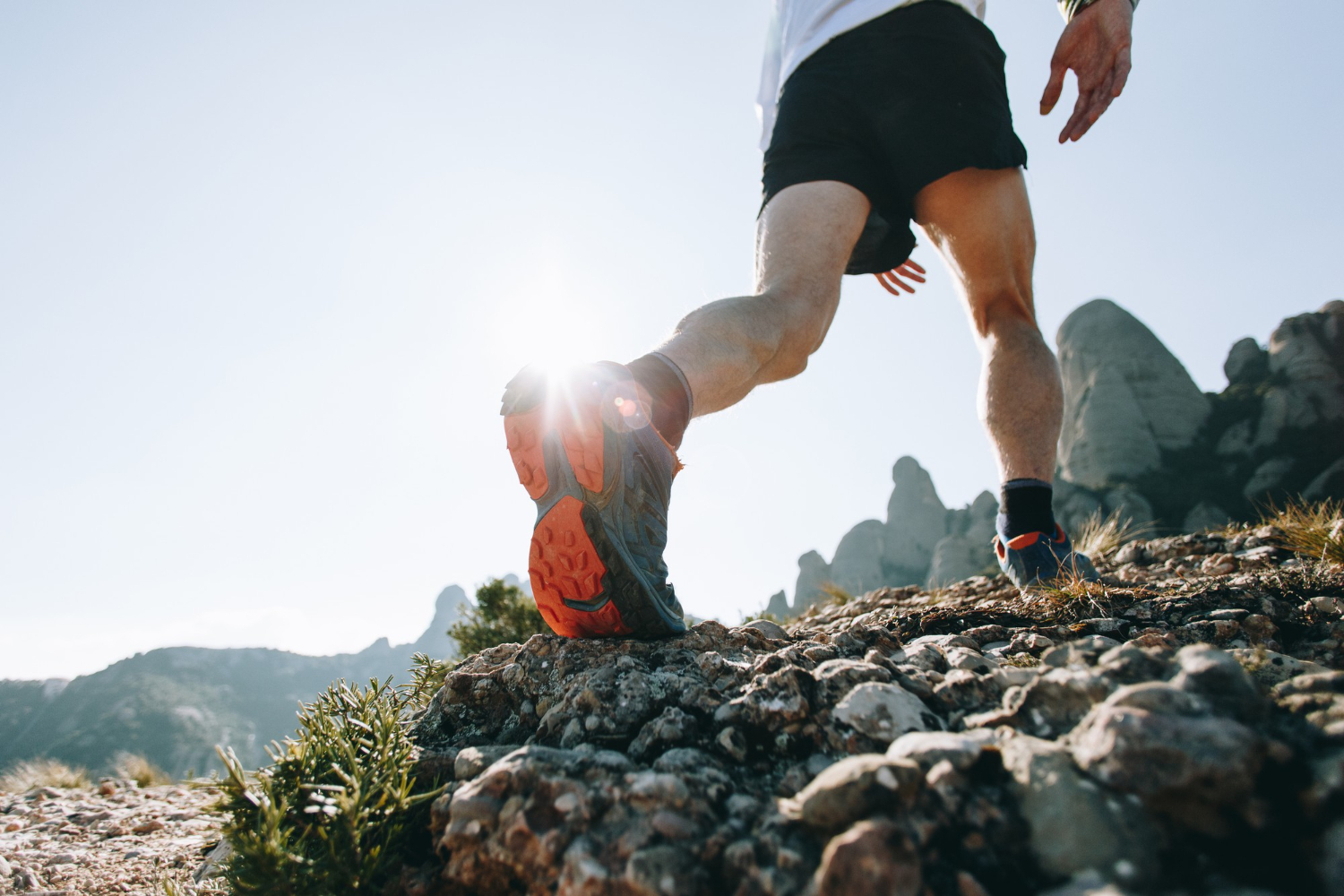
Do you suffer from knee pain when descending mountains? Discover how trail running affects your joints and how physiotherapy at Therapeía helps you prevent it.
With the arrival of spring and the thaw, mountain trails fill with trail running and hiking enthusiasts. The mountains offer a unique escape and an unparalleled physical challenge, but they are also some of the most demanding terrains for our biomechanical structure.
Unlike running on asphalt, the mountains present irregularities, steep slopes, and unstable terrain that force our bodies to make constant adjustments. At Therapeía Physiotherapy, we see how many athletes suffer injuries that could have been avoided with proper preparation and a preventative approach. Today we focus on the main culprit behind mountain running injuries: the knee.
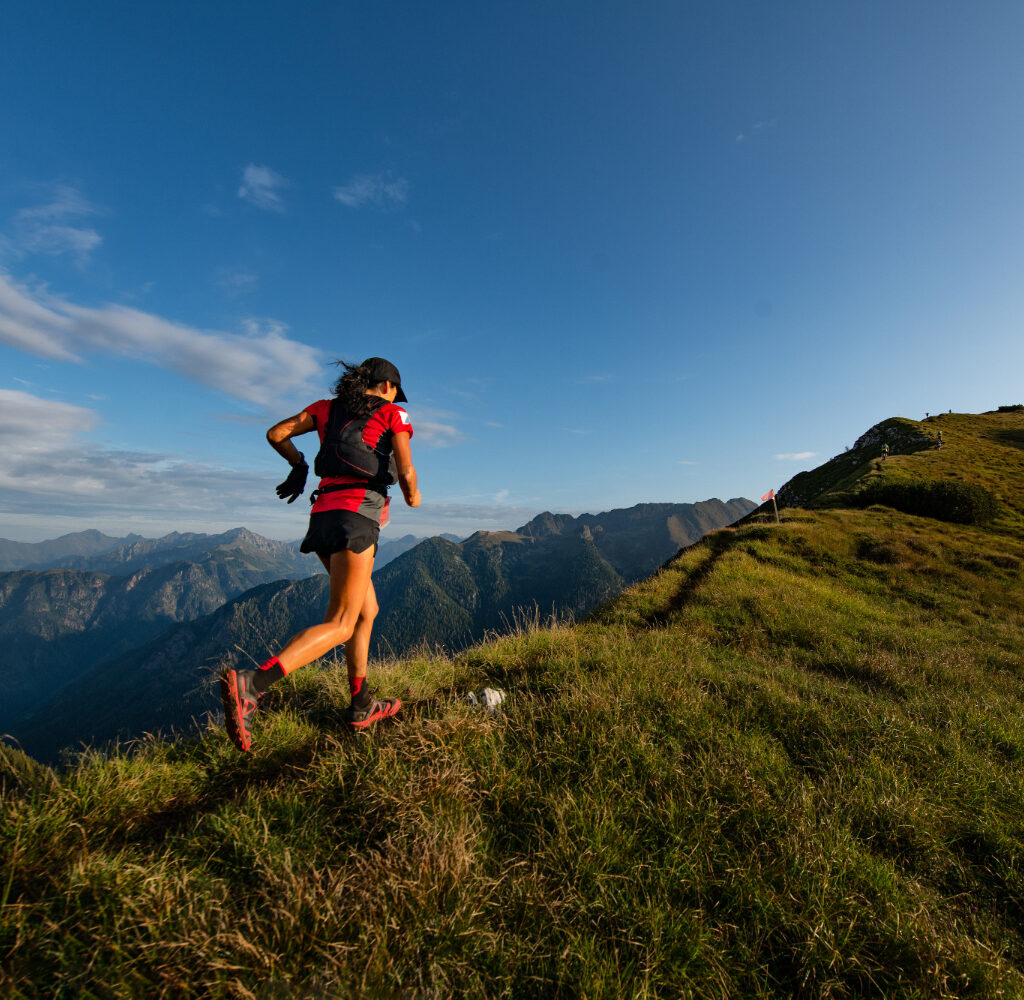
The challenge of descents: The eccentric 📉 load
Many hikers and runners feel strong on the uphills (where the work is primarily cardiovascular and concentric strength), but “suffer” on the downhills. Why does this happen?
During the descent, our muscles perform eccentric work. This means that the muscles (especially the quadriceps) must contract while extending to decelerate the body’s weight multiplied by gravity and the inertia of the impact. This action generates enormous stress on the patellar tendon and the patellofemoral joint. If the muscles are unable to manage this load, the impact is transferred directly to the cartilage and menisci.
The most common injuries in mountaineering 🚩
To enjoy the mountains in the long term, it is vital to identify the most frequent pathologies that we treat in our clinic:
- Iliotibial Band Syndrome (Runner’s Knee): A sharp, stabbing pain on the outside of the knee that usually appears after prolonged activity, especially on long descents. It is caused by the repetitive friction of the iliotibial band over the femoral condyle.
- Patellar tendinopathy: Inflammation or degeneration of the tendon that connects the kneecap to the shinbone. It is very common in those who suddenly increase the elevation gain of their routes without prior adaptation.
- Ankle sprains: The instability of the terrain (loose stones, roots) causes sprains that, if not properly rehabilitated, generate chronic instability that ends up affecting the knee and hip.
- Chondropathy Patellae: Wear and tear of the cartilage located behind the kneecap due to poor “tracking” or alignment of the kneecap during movement.
Keys to preventing injuries on mountain ✅ trail
It’s not just about having good lung capacity; For the mountain, you need an “armored” body:
- Proprioception and Balance: Training on unstable surfaces in the gym or at home helps your nerve sensors react faster to poor support on the mountain, preventing sprains.
- Strengthening the Gluteus Medius: This muscle is the main stabilizer of the pelvis. If the gluteus medius is weak, the knee tends to collapse inward (valgus), increasing the risk of ligament and meniscus injuries.
- Walking Sticks: They’re not just for seniors. Using walking sticks correctly can reduce the load on lower limb joints by up to 25% during descents.
- Technical Footwear: Make sure your shoes have the necessary grip and cushioning appropriate for your weight and the type of terrain (rocky, muddy or technical).
How do we help you at Therapeia Physiotherapy? 👨⚕️✨
At Therapeía, we specialize in sports physiotherapy applied to outdoor sports. Our approach for mountaineers and trail runners includes:
- Biomechanical Analysis of Movement: We evaluate how your joints move to detect imbalances that may lead to chronic injuries.
- Manual Therapy and Osteopathy: We work on ankle mobility (essential for absorbing impacts) and hip mobility to release pressure from the lower back and knees.
- Recovery Technology: We use techniques such as Indiba or Radiofrequency to treat tendon inflammation and accelerate the healing of damaged tissues after a demanding competition or route.
- Therapeutic Exercise Planning: We design a specific strength routine for you so that your quadriceps and glutes are the best life insurance for your knees.
Are you preparing your next mountain route or race? 🆘
Don’t let a sore knee force you to turn back before reaching the summit. A well-prepared body enjoys the scenery more and performs better on the trail. At Therapeía, we help you get your legs ready to take on your goals.
👉 Book your sports physiotherapy session and prepare your body for the mountains