

Is it normal to experience urinary incontinence while doing CrossFit or running? Discover why it happens and how pelvic floor physiotherapy at Therapeía can help you train without limits.
In the world of fitness and high-intensity sports, a reality that shouldn’t be normalized has become commonplace: the use of sanitary pads or panty liners for running or attending a CrossFit class. Many women assume that, after childbirth or upon reaching a certain age, minor urine leakage during a box jump, a double under, or a series of sprints is simply “part of the job.”
At Therapeía, we want to be very clear: just because something is common doesn’t mean it’s normal. Stress urinary incontinence is a sign that your pressure management system is failing, and the first step to addressing this is understanding how your pelvic floor functions in relation to high-impact sports.
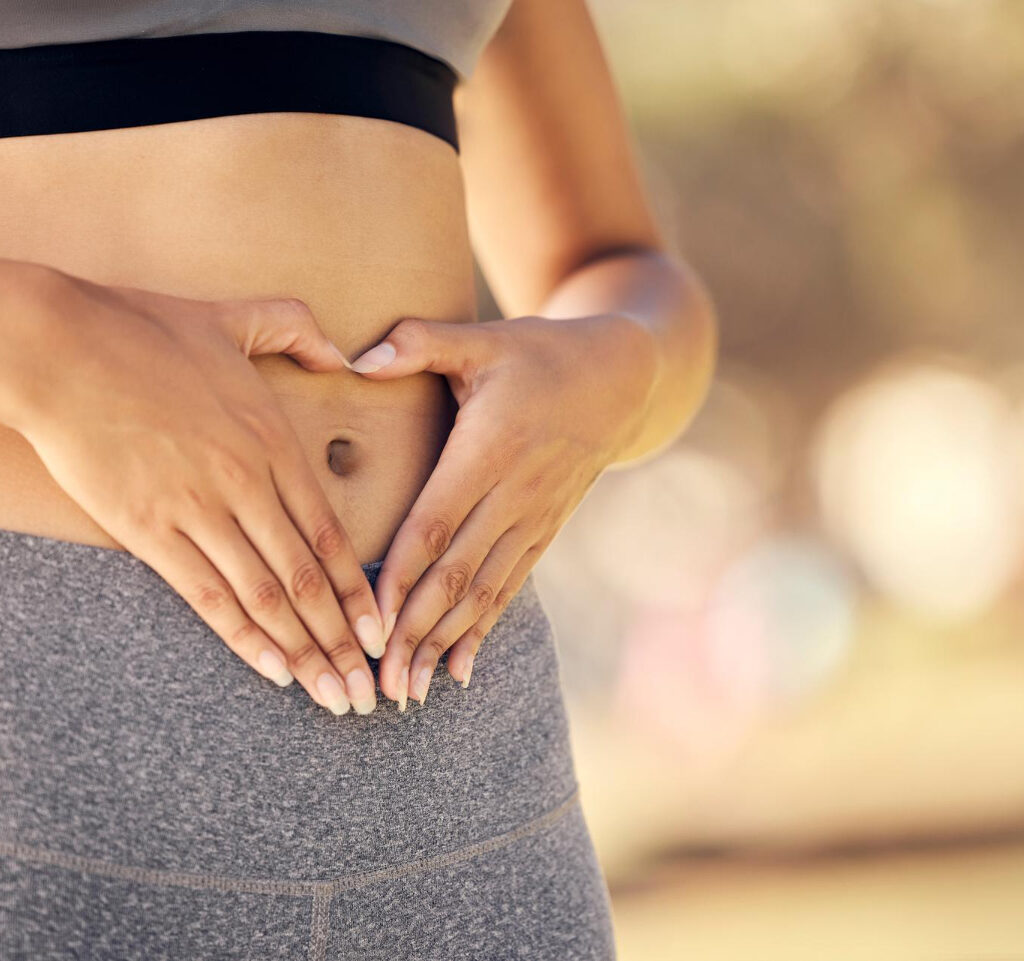
The pelvic floor: Your internal “shock absorber” 🧠🧘♀️
The pelvic floor is a group of muscles and ligaments that close the abdominal cavity at its base. Its function is not only to support the organs (bladder, uterus, and rectum) but also to act as a shock absorber.
When we run or jump, an impact force is generated that travels from the ground upwards, but this also causes an increase in intra-abdominal pressure. If the pelvic floor does not have the necessary tone or reaction capacity to contract before the impact, the pressure “pushes” the bladder downwards, causing involuntary urine leakage.
Why is impact the biggest enemy of a weak pelvic floor? 👟💥
High-impact sports (running, CrossFit, padel, basketball) are characterized by flight phases followed by abrupt landings. It is estimated that, when running, our pelvic floor receives a load equivalent to 3 or 4 times our body weight with each stride.
If this system is weakened by factors such as:
- Previous deliveries (vaginal or cesarean).
- Hormonal changes (menopause).
- Chronic constipation.
- Poor breathing control while lifting weights.
The result is a dysfunction that not only affects hygiene or comfort, but can lead to more serious problems such as prolapses (descent of pelvic organs).
Busting myths: It’s not just about doing Kegels 🚫🙅♀️
Traditionally, the famous “Kegel exercises” (contracting and relaxing) have been recommended to solve the problem. However, at the Therapeía clinic, we see cases where the problem is not a lack of strength, but rather excessive tension (hypertonia) or a lack of coordination.
A pelvic floor that’s always stiff can’t absorb impact. It’s like trying to jump on a wooden board instead of a trampoline. That’s why an assessment with a specialized physiotherapist is vital to determine if you need to strengthen, relax, or simply learn to coordinate your breathing with exertion.
Strategies for safe training ✅
No tienes que dejar de hacer el deporte que amas, pero sí debes hacerlo con inteligencia:
- Manage your breathing: Never hold your breath (apnea) during maximum effort. Exhale at the moment of impact or lifting to release abdominal pressure.
- Introducing Hypopressives: Hypopressive Abdominal Gymnastics (HAG) helps to “reposition” the viscera and tone the abdominal girdle without increasing pressure on the perineum.
- Strengthen your core: A competent abdominal girdle helps to distribute the loads before they reach the pelvic floor.
- Alternate the impact: If you feel heaviness or leakage, alternate your running days with cycling or swimming while you rehabilitate the area.
How can we help you at Therapeía? 👩⚕️✨
At Therapeía, we have a specialized Pelvic Floor Physiotherapy department. Our approach is completely personalized and discreet.
- Ultrasound and Functional Assessment: We evaluate how your muscles behave in real time under stress.
- Radiofrequency (Indiba): To improve vascularization and elasticity of collagen tissue.
- Biofeedback and Neuromodulation: State-of-the-art tools to restore the brain-muscle connection.
- Impact Readaptation Programs: We support you in your return to running or boxing, ensuring that your body is ready for the load.
Don’t let your pelvic floor hold you back from your athletic goals 🆘
Training with the fear of leakage isn’t training, it’s suffering. At Therapeía, we help you regain control of your body so your only concern in your next workout is beating your personal best. Intimate health is the driving force behind your athletic performance.
👉 Book your pelvic floor assessment at Therapeía and get back to training with complete freedom