
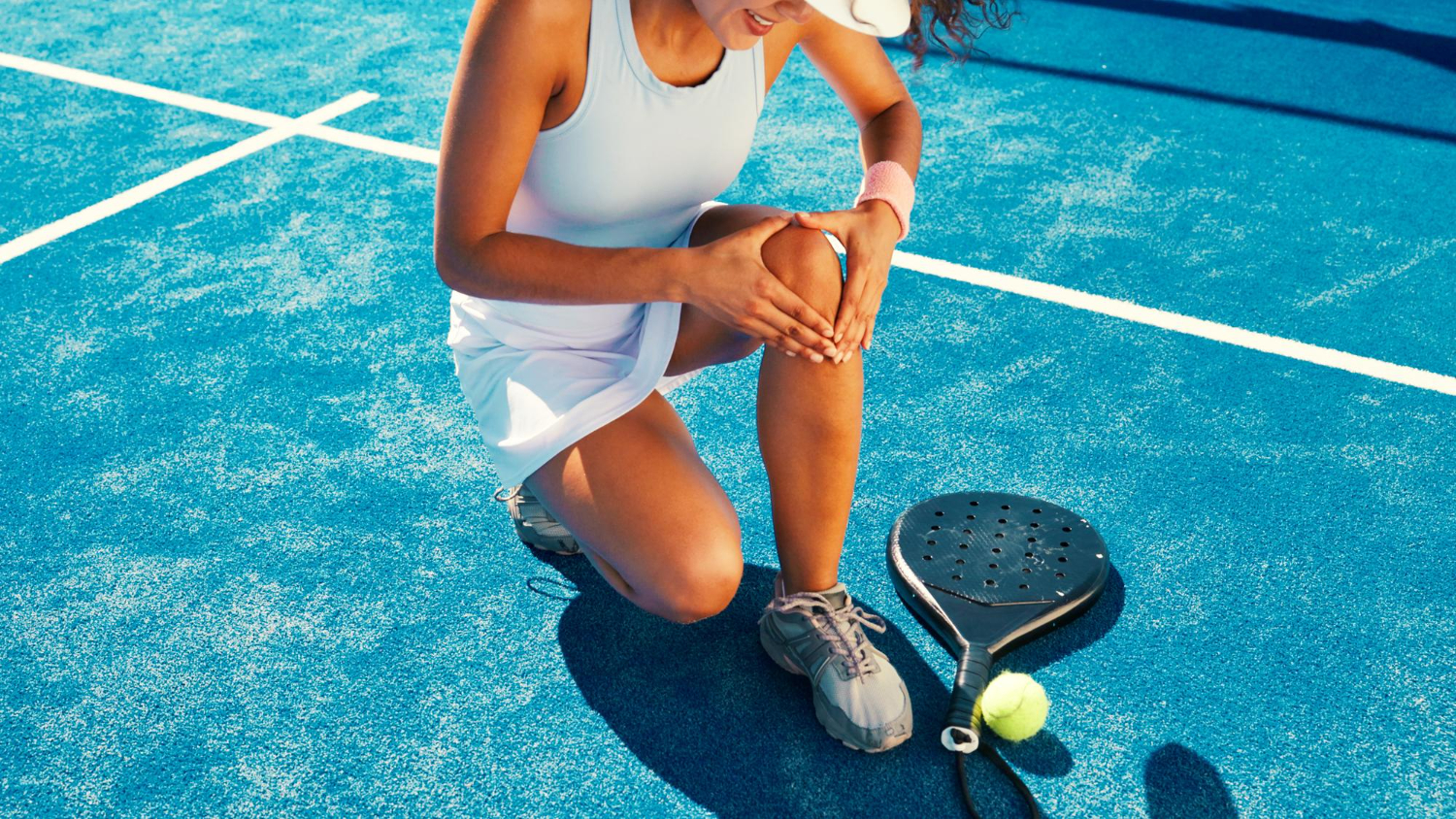
Padel has gone from being a niche sport to a social phenomenon. Its dynamism, social component, and rapid learning curve make it addictive. However, this popularity has been accompanied by a notable increase in emergency room visits for trauma patients and physiotherapy consultations.
Amateur players often associate padel exclusively with epicondylitis, or “tennis elbow.” But the clinical reality is different: padel is a biomechanically demanding sport that subjects joints to shear forces, sudden rotations, and intense decelerations. At Therapeía Physiotherapy, we analyze injuries beyond the elbow and teach you how to protect your body.
1. The Shoulder: The Engine of Aerial Blows 🏸
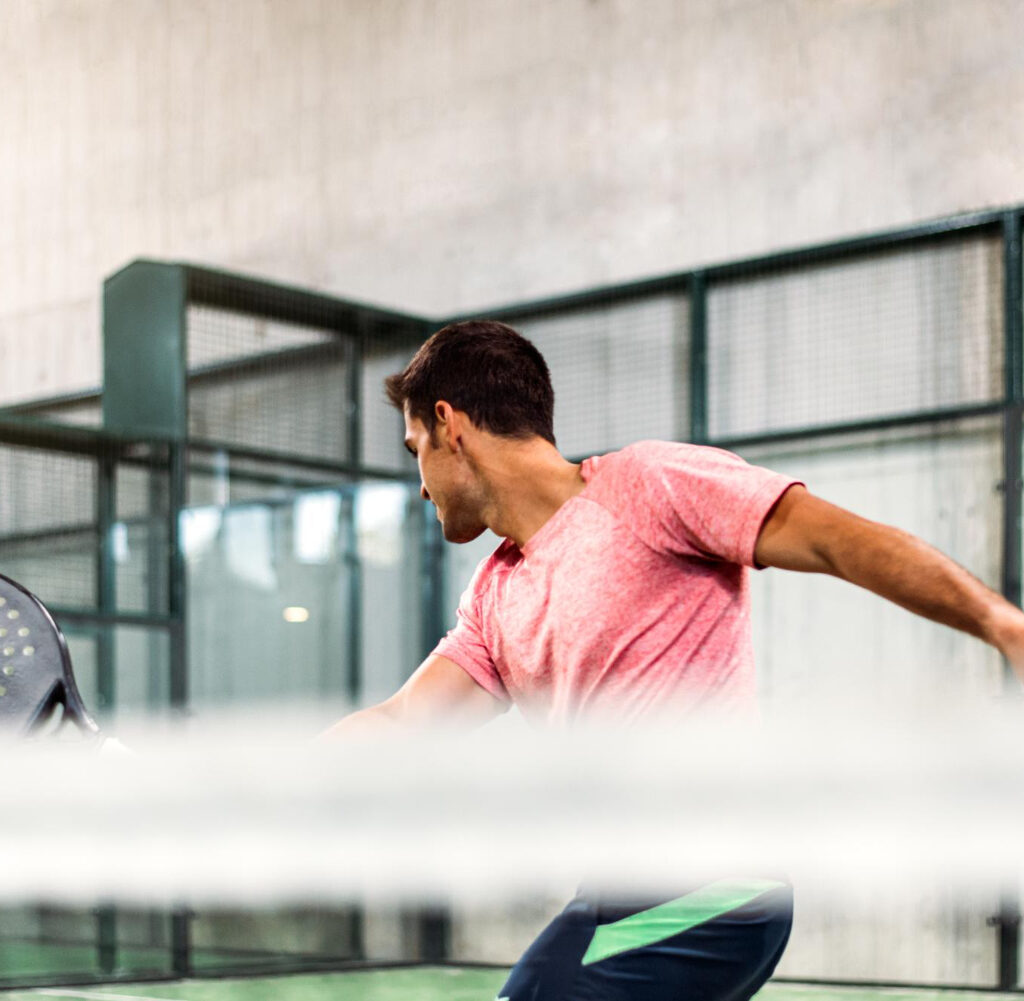
The shoulder is probably the most complex and mobile joint in the body, which makes it vulnerable. In padel, movements like the smash, the bandeja, or the vibora require maximum abduction and external rotation followed by explosive acceleration.
- The common injury: Rotator cuff tendinopathy or subacromial bursitis.
- The risk: Lack of mobility in the thoracic spine forces the shoulder to work in forced ranges of motion, causing impingement of the tendons.
2. The Lumbar Spine: The axis of rotations 🔄
Padel is played in a confined space, which involves constant turns and changes of direction. Most amateur players perform these rotations by locking their hips, which transfers all the twisting force to the lumbar vertebrae.
- The common injury: Mechanical low back pain or, in more severe cases, protrusions and herniated discs.
- The preventive approach: It is essential to work the “core” or abdominal girdle not only for aesthetics, but to stabilize the spine during impacts and rapid turns.
3. Knees and Ankles: The Victims of Braking 🦵
Artificial turf with sand allows for sliding, but sudden braking and 180-degree changes of direction put ligaments and menisci to the limit.
- Common injuries: Ankle sprains, patellar tendinopathy and, in the worst scenario, rupture of the Anterior Cruciate Ligament (ACL).
- Technical fact: Footwear with the appropriate sole pattern (herringbone or hybrid) is the first line of defense, but the strength of the quadriceps and glutes is what really protects the joint.
4. The Calf: The tennis player’s 💥 “axe”
One of the most dramatic injuries in padel is a rupture of the medial gastrocnemius muscle, popularly known as a “calf strain” or “gave-up.” It typically occurs during an explosive sprint towards a drop shot. Dehydration, accumulated fatigue, and a lack of a dynamic warm-up are the main triggers.
How to prevent injuries in padel? Success ✅ strategies
To continue enjoying the 20×10 game without surgery, it is vital to follow these principles:
- Dynamic Warm-up (Minimum 10 min): Forget static stretching before playing. Perform joint mobility exercises, gentle lateral movements, and simulated shots to prepare your neuromuscular system for the activity.
- Strengthening Off the Court: Padel alone won’t get you in shape; you need to be fit to play padel. A functional strength program that includes squats, planks, and resistance band shoulder exercises will make all the difference.
- Striking Technique: Many elbow and shoulder injuries result from over-winding the shot or hitting the ball behind the body. Receiving technical lessons drastically reduces stress on the joints.
- Listen to your body: Pain is a warning sign. Playing around with anti-inflammatories only masks the problem and can turn a minor strain into a chronic injury.
The role of the Sports Physiotherapist in Therapeia 👨 ⚕️✨
At Therapeía Physiotherapy, our approach to padel players is holistic. We don’t just treat pain once it has appeared; we also focus on preventative physiotherapy.
- Biomechanical Assessment: We analyze your muscle imbalances to detect which area is overworking.
- Manual Therapy and Osteopathy: To ensure that your joints (especially ankle, hip and back) have the necessary range of motion.
- Sports Rehabilitation: If you are already injured, we guide you back to the courts through specific exercises that mimic the movements of padel.
Do you want to keep winning games without your body taking its toll? 🏆
At Therapeía, we are experts in sports physiotherapy and we fully understand the demands of padel. Don’t wait until pain forces you to hang up your racket. A maintenance and preventative session can save you months of inactivity.
👉 Make your appointment now at Therapeia Physiotherapy and ensure your performance on the court